Health Canada recently made a statement against “placenta products.” We’d like to address any concerns that may be associated with thier statement.
Safety First
APPA has always been aware of the very serious safety concerns regarding some methods of placenta preparation. In many ways, we completely agree with the concerns. In fact, these concerns are the very reason APPA was formed. The founders saw many dangerous practices within the community. We knew then, as we know now, that the best way to address safety in placenta preparation is through knowledge and education.
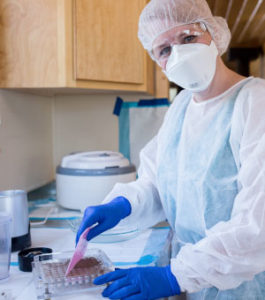
APPA Certified Placenta Arts Specialists spend countless hours researching and studying. They are meticulously educated to prevent cross-contamination through rigorous training in safe preparation techniques. They learn to prevent the potential transmission of bloodborne diseases in accordance with OSHA Bloodborne Pathogens Standard – 29CFR 1910.1030. Part of APPA’s certification process includes a thorough board reviewed protocol. These protocols represent lab quality safety standards of practice.
Like other meats, placentas hold the potential for bacteria and viruses that can be harmful when ingested. E. Coli, Group B Strep, etc. are some of the most commonly feared. Yet we know these bacteria are relatively fragile with death point temperatures well within USDA recommended food safe temperatures. This is why APPA strictly follows these guidelines, in order to ensure eradication or sufficient reduction in potentially harmful bacteria, thus ensuring the safety of the dried placenta.
There’s been a lot of media hype surrounding Group B Strep. We know that GBS is sensitive (meaning it will start to die) after being exposed to moist heat at a temperature that is at least 55° C (131° F) for 30 minutes. (Public Health Agency of Canada) When done properly, both steam dehydrated and raw dehydrated preparation methods exceed the death point for GBS. You can learn more about GBS and placenta encapsulation safety here.
Jena University recently looked at the Placenta Biome and the effects of placenta encapsulation. In their research, they learned that in both raw dehydrated and the traditional steamed dehydrated methods, at temps lower than USDA guidelines, were sufficient to drastically reduce bacteria, well within an acceptable range for ingestion. (Johnson)
Researched Evidence
While anecdotal evidence on the benefits of placentophagy abounds, scientific research is still quite minimal. That said, the research that is available is promising.
- 189 women over age 18 responded to a 21 question survey conducted in 2010 by the University of Las Vegas Anthropology Department. Of those surveyed, the most commonly reported benefits of placentophagy were improved mood (40%), increased energy (26%), improved lactation (15%), and alleviated bleeding (7%). Of the most commonly reported negative effects, 69% reported no negative effects, unpleasant taste (7%), and headache (4%). (Selander )
Researchers have also discovered processed placenta contains many nutritive minerals providing, on average, 24% RDA for iron, 7.1% RDA for selenium, 1.5% RDA for zinc, and 1.4% RDA for copper. (Young)
- In a review of maternal salivary hormones, researchers found “detectable changes in circulating hormone concentrations that could potentially impact a mother’s hormonal physiology.” (Young)
- A link between decreased maternal exhaustion and highly quality sleep was found connected to mothers who ingested their placenta.(Selander)
- When researchers looked for 17 specific hormones in processed placenta, they discovered estradiol, progesterone and allopregnanolone were found in high enough levels to reach physiological effect thresholds at normal (3,300 mg) dosages. Incidentally, Allopregnanolone is the active ingredient in soon to be approved Brexanalone of Sage Therapeutics as a promising pharmaceutical treatment of postpartum mood disorders. https://www.fda.gov/downloads/AdvisoryCommittees/CommitteesMeetingMaterials/Drugs/PsychopharmacologicDrugsAdvisoryCommittee/UCM624646.pdf
Risks
To date, APPA is aware of only one report, worldwide, claiming harm due to the use of placenta. We won’t go into detail
on the case because we’ve covered it here. We will say, this claim is, at best, problematic with little to no proof of placentophagy as the cause. However, because placentophagy is not a common occurrence, viewed as alternative, and frankly viewed as gross or weird, media has exploited and sensationalized the claim, perpetuating a cycle of fear. APPA stands firm that the CDC did not do their due diligence in determining the true cause of the infection in question. More recently researchers reviewed placentophagy outcomes in 23,000 community births and found that consuming the placenta was not associated with any adverse neonatal outcomes. (Young)
Like all things there are reasons placentophagy might not be suitable for you. We call these contraindications. Some of the contraindications for placentophagy are:
- Chorioamnionitis (infection of the membranes).
- Maternal infection during or immediately following labor and delivery.
- Neonatal infection within the first 48 hours postpartum.
- Improper storage of the placenta.
- Not placed on ice within 2 hours of delivery.
- Refrigerated longer than 48 hours before being frozen.
- Placenta not kept under 40° F for the entire storage
- Active infections that may be reacquired.
- Lyme Disease
- Clostridium Difficile, commonly referred to as C. Diff
When these contraindications, safe handling, and preparation methods are followed. We know that prepared placenta consumption is a safe practice with undeniable evidence of benefit.
Health Canada’s bold statement against placentophagy is disheartening and misinformed. With continued research, we are confident placentophagy will become increasingly popular in mainstream prevention and postpartum care for birthing people worldwide. APPA is committed to protecting the birthing person’s right to utilize their placenta in whatever way they choose and in safe placenta preparation practices. To this, we would like to encourage a conversation with Health Canada and governing bodies around the world to close the gap of misconceptions in order to work together to support healthy families around the world. Jules@placentaarts.com
Works Cited
Johnson, Sophia K., et al. “Human Placentophagy: Effects of Dehydration and Steaming on Hormones, Metals and Bacteria in Placental Tissue.” Placenta, vol. 67, 2018, pp. 8–14., doi:10.1016/j.placenta.2018.05.006.
Public Health Agency of Canada. “Pathogen Safety Data Sheets: Infectious Substances – Streptococcus Agalactiae.” Shigellosis – Fact Sheet – Public Health Agency of Canada, 30 Apr. 2012, www.phac-aspc.gc.ca/lab-bio/res/psds-ftss/streptococcus-agalactiae-eng.php.
Selander, Jodi, et al. “Human Maternal Placentophagy: A Survey of Self-Reported Motivations and Experiences Associated with Placenta Consumption.” Ecology of Food and Nutrition, vol. 52, no. 2, 2013, pp. 93–115., doi:10.1080/03670244.2012.719356.
Selander, Jodi. “Placenta vs Placebo UNLV Research Study Results.” PlacentaBenefits, 5 Dec. 2017, placentabenefits.info/placenta-vs-placebo-unlv- research-study-results/.
Young, Sharon M., et al. “Effects of Placentophagy on Maternal Salivary Hormones: A Pilot Trial, Part 1.” Women and Birth, vol. 31, no. 4, 2018, doi:10.1016/j.wombi.2017.09.023.
Young, Sharon M., et al. “Human Placenta Processed for Encapsulation Contains Modest Concentrations of 14 Trace Minerals and Elements.” Nutrition Research, vol. 36, no. 8, 2016, pp. 872–878., doi:10.1016/j.nutres.2016.04.005.